Source Waterproof Laminated Jute Bag for Gift, Travel, and Daily Use
Compare 30 waterproof laminated jute bag options featuring customizable sizes, sturdy handles, and logo printing capabilities. Buyers can evaluate specifications for gift, travel, and supermarket applications with flexible MOQs and delivery times.
Key considerations
Products List


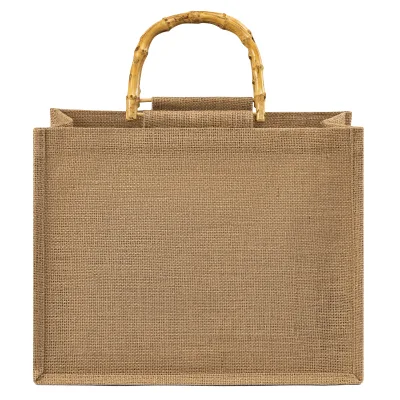


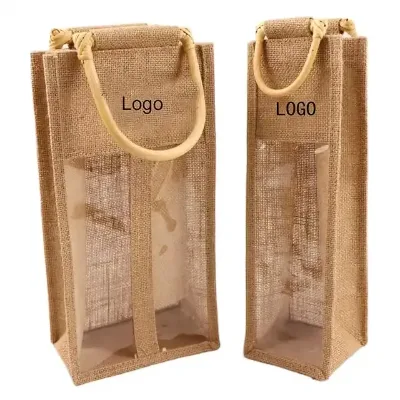





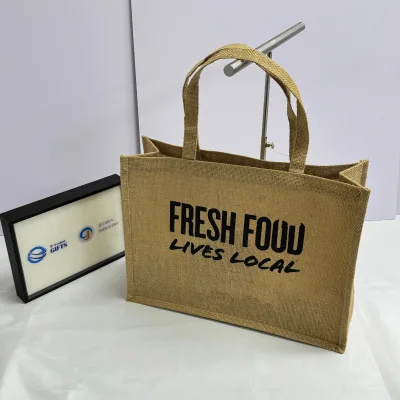


Comprehensive Sourcing Guide
Strategic Sourcing Guide for Waterproof Laminated Jute Bags
Understanding Material Composition and Structural Integrity
When sourcing waterproof laminated jute bags, the primary objective is to balance the natural aesthetic of jute with the functional necessity of water resistance. Jute is a natural fiber known for its durability and biodegradability, yet in its raw state, it is susceptible to moisture. The "waterproof" designation in this context typically refers to a specific lamination process or coating applied to the fabric. Buyers must recognize that product attributes in the market vary significantly; some listings explicitly state "Waterproof," while others indicate "Non-Waterproof" or "Soft" hardness. This discrepancy highlights the critical need to verify the specific lamination technology used by a potential supplier.
The core material is identified as Jute, often paired with an inside material of fabric to enhance structure or provide a barrier layer. The physical characteristics of the bag, such as a "Soft" or "Partial Hard" hardness, depend heavily on the thickness of the jute weave and the rigidity of the lamination. A bag described as "Sturdy and Reusable" suggests a robust construction, likely utilizing a higher gram weight jute or a reinforced lamination layer. The closure type is frequently observed as "Open Top" or "Tote," which influences the internal volume and the ease of access for the user.
In terms of dimensions, standard specifications often cite a size of 32Wx24Hx11D cm, though "Customized Size" is a prevalent attribute in the market. This flexibility allows buyers to tailor the bag to specific product dimensions or branding requirements. The shape is predominantly "Square" or "Horizontal Square," providing a stable footprint for stacking and display. The handle is a critical component; while some descriptions mention an "Orange Rope Handle" or "Nylon" handles, others simply state "Yes" for handle availability. The handle attachment method, often involving "Stitching Bag" elements, must be secure to support the weight of the contents, which can range from lightweight promotional items to heavier retail goods.
Technical Specifications and Customization Capabilities
The technical profile of a waterproof laminated jute bag is defined by its ability to be customized without compromising structural integrity. The "Customization" attribute is a key feature, allowing for variations in size, color, and pattern. The standard pattern observed is "Solid Color with Natural Jute Trim," but "Custom" pattern types are available to meet specific branding needs. Color options are generally "Customized," enabling brands to match their corporate identity precisely.
The printing capabilities are another vital technical consideration. Suppliers typically offer "Silkscreen or Heat Transfer Printing" for logo application. This is essential for promotional use, where the bag serves as a mobile advertisement. The "Logo Printing" feature is standard, but the quality of the print depends on the surface preparation of the laminated jute. A smooth lamination layer ensures better ink adhesion and sharper graphics compared to a rough, untreated jute surface.
Production standards vary, with some products adhering to specific model numbers like "18" or "J-01," while others are defined by "Custom Make" or "Customized Size" standards. The packing method is equally important for logistics. Options range from "Carton" and "Conventional Transport Package" to "Top Quality Standard Export Carton" or individual "opp bag" packaging. The choice of packaging affects the unit cost and the protection level during transit. For high-volume orders, export-standard cartons are preferred to prevent damage, whereas smaller orders might utilize simpler packaging to reduce costs.
The weight of the bag is a significant factor in shipping calculations and perceived quality. A specific observation notes a weight of 160g, which serves as a benchmark for medium-duty bags. Heavier bags may offer better durability but increase freight costs. The "Hardness" attribute, described as "Soft" or "Partial Hard," indicates the bag's ability to hold its shape when empty. A "Partial Hard" structure is often preferred for retail applications where the bag needs to stand upright on a shelf.
Compliance, Certification, and Market Standards
Navigating the compliance landscape for jute products requires careful verification of certifications, as the market contains mixed signals regarding environmental and safety standards. While "GOTS" (Global Organic Textile Standard) and "OEKO-TEX" are mentioned in background contexts, they should not be assumed as automatic attributes of every listed product. Buyers must explicitly request certification documentation to confirm that the jute fibers are organic and that the lamination process does not introduce harmful substances.
The "Main Market" for these products includes regions with strict environmental regulations, such as the USA, Japan, European countries, Russia, Dubai, Singapore, and South Korea. These markets often demand higher compliance standards regarding chemical usage in dyes and coatings. For instance, the European market may require adherence to REACH regulations, ensuring that the lamination materials do not contain restricted substances.
Origin plays a role in compliance verification. Products are sourced from locations such as "China," specifically from regions like "Anhui" and "Wenzhou." While these are established manufacturing hubs, buyers should verify that the specific factory holds relevant quality management certifications. The "Standard" attribute often lists "Customized Size" or "Custom Make," which implies that the production process is flexible but must still adhere to the buyer's specific quality requirements.
Buyers should also consider the "Feature" of the bag being "Sturdy and Reusable." This claim aligns with sustainability goals, but it must be substantiated by the durability of the lamination. If the lamination peels or cracks after a few uses, the bag fails to meet the reusable criteria. Therefore, requesting sample testing for tensile strength and water resistance is a prudent step before committing to a large order.
Cost Drivers and Pricing Dynamics
The pricing of waterproof laminated jute bags is influenced by several variable factors, primarily material costs, customization levels, and order volume. The observed price range in the market spans from 0.1 to 10 USD, a wide spectrum that reflects differences in quality, size, and order quantity. Lower prices typically correspond to standard sizes, minimal customization, and lower-quality lamination. Higher prices are associated with custom dimensions, complex printing, and premium materials.
The Minimum Order Quantity (MOQ) is a significant cost driver. While some suppliers list an MOQ as low as 1 piece, others require a substantial commitment of 3000 pieces, with a common benchmark of 500 pieces. Adhering to a higher MOQ often results in a lower unit price due to economies of scale. However, for buyers testing the market or requiring small batches, the unit cost will be higher.
Additional cost factors include the type of handle and the packing method. A "Nylon" handle or a specialized "Orange Rope Handle" may incur extra costs compared to standard fabric handles. Similarly, the choice of "Top Quality Standard Export Carton" versus a simple "opp bag" will impact the final landed cost. The "Delivery Time" of 5-20 days depending on order size also affects logistics planning and potential rush fees.
Sample costs are another consideration. While "Samples Are Free" is a common offer, buyers should verify if shipping costs for samples are covered by the supplier or the buyer. Free samples are a valuable tool for quality assessment but should not be the sole basis for a procurement decision without a full-scale production trial.
Typical Applications and Usage Scenarios
Waterproof laminated jute bags serve a diverse range of applications, making them versatile tools for various industries. The primary usage category is "Gift," where the bag acts as a premium packaging solution for corporate events, weddings, or holiday promotions. The "Fashionable" style and "Solid Color with Natural Jute Trim" design appeal to consumers looking for eco-friendly yet stylish accessories.
Beyond gifting, these bags are widely used in "Advertising" campaigns. The large surface area available for "Silkscreen or Heat Transfer Printing" makes them effective for brand visibility. Companies often distribute these bags at trade shows, conferences, or as part of a marketing campaign to increase brand recall. The "Main Market" data suggests a strong demand in international trade, where these bags are used for product packaging in retail sectors.
The "Application" list also includes "Travel," "Supermarket," "Outdoor," and "Daily" use. In a supermarket context, the "Waterproof" feature is crucial for carrying groceries that may be wet or heavy. The "Tote" closure type allows for easy loading and unloading of items. For outdoor activities, the durability of the jute and the water-resistant lamination protect contents from light rain or spills.
The "Gender" attribute is listed as both "Unisex" and "Female," indicating that these bags are designed to appeal to a broad audience. The "Style" is described as "Handled" and "Simple," fitting a wide range of fashion preferences. Whether used for carrying books, electronics, or personal items, the bag's "Sturdy and Reusable" nature ensures it can withstand repeated use, reducing waste and promoting sustainability.
Supplier Evaluation and Quality Control Protocols
Evaluating a supplier for waterproof laminated jute bags requires a multi-faceted approach focusing on production capability, quality control, and communication. Buyers should verify the supplier's ability to meet the "Custom Make" standard and their capacity to handle the required "Delivery Time" of 5-20 days. A reliable supplier will provide clear lead times and maintain consistent communication throughout the production process.
Quality control is paramount, especially given the variation in attributes like "Waterproof" and "Non-Waterproof." Buyers should implement a rigorous inspection protocol that includes checking the lamination adhesion, the strength of the stitching, and the accuracy of the printed logos. The "Hardness" of the bag should be tested to ensure it meets the "Soft" or "Partial Hard" specifications required for the intended application.
A comparison of key supplier attributes can help in decision-making. The following table outlines critical factors to consider when evaluating potential partners:
| Evaluation Factor | Key Considerations | Verification Method |
|---|---|---|
| Material Quality | Jute purity, lamination thickness, inside fabric type | Request material certificates and physical samples |
| Production Capacity | Ability to meet MOQ (500-3000 pcs) and lead times | Review past order history and factory audit reports |
| Customization | Flexibility in size, color, and printing methods | Test sample production with custom specifications |
| Packaging | Export-standard cartons vs. simple packaging | Inspect packaging for damage resistance and labeling |
| Compliance | Certifications (GOTS, OEKO-TEX) and market standards | Request valid certification documents and test reports |
| Pricing | Unit cost vs. MOQ and shipping terms | Compare total landed cost including freight and duties |
Buyers should also assess the supplier's response to the "Sample" request. A supplier that provides free samples and is willing to make adjustments based on feedback demonstrates a commitment to quality and customer satisfaction. The "Place of Origin" being "Anhui, China" or "Wenzhou" suggests established manufacturing clusters, but buyers should still verify the specific factory's reputation and reliability.
Long-Term Procurement and Sustainability Considerations
Sourcing waterproof laminated jute bags is not just a transactional activity but a strategic decision that impacts long-term brand value and sustainability goals. The "Reusable" feature of these bags aligns with global trends toward reducing single-use plastics. By choosing jute, a biodegradable material, buyers can enhance their corporate social responsibility (CSR) profile. However, the lamination process must be carefully selected to ensure it does not hinder the biodegradability of the bag or introduce toxic elements.
Long-term procurement involves building a relationship with a supplier who can scale with the buyer's needs. As order volumes increase, the unit cost should decrease, and the lead time should stabilize. Buyers should aim for a partnership where the supplier can offer continuous improvements in design and functionality, such as new handle options or advanced printing techniques.
Sustainability also extends to the end-of-life of the product. Buyers should inquire about the recyclability of the laminated jute. While jute is natural, the lamination layer may complicate recycling. Opting for water-based laminations or biodegradable coatings can further enhance the eco-friendly credentials of the product.
Finally, buyers must remain vigilant about market changes and regulatory updates. Standards in the USA, Europe, and other key markets may evolve, requiring adjustments in material sourcing or production processes. Maintaining open communication with suppliers and staying informed about industry trends will ensure that the procurement strategy remains effective and compliant over the long term. By focusing on these strategic elements, buyers can secure a reliable supply of high-quality waterproof laminated jute bags that meet both functional and ethical standards.
FAQs
What is the standard size for waterproof laminated jute bags?
The standard size is 32Wx24Hx11D cm, though customized sizes are widely available. Buyers can request specific dimensions to fit their product needs while maintaining the square or horizontal square shape typical of these tote bags.
Can I get a free sample before placing a large order?
Yes, samples are free of charge for most suppliers offering these bags. However, shipping costs for the samples may vary, and the production lead time for the full order typically ranges from 5 to 20 days depending on the quantity.
Which printing methods are available for logo customization?
Silkscreen or heat transfer printing are the standard methods used for logo application on these bags. This customization allows for solid colors with natural jute trim or fully custom patterns to match your brand identity.
What is the minimum order quantity for these jute bags?
The minimum order quantity is typically 500 pieces, though some suppliers may accept orders as low as one piece. Higher volumes often result in better unit pricing, with maximum order capacities reaching up to 3000 pieces.
How are these waterproof laminated jute bags packed for shipping?
Bags are packed in cartons, opp bags, or conventional transport packages depending on the order size. Export-standard top quality cartons are recommended for large orders to ensure the sturdy and reusable bags arrive without damage.
What is the weight of a standard waterproof laminated jute bag?
A standard bag weighs approximately 160 grams, providing a balance between durability and portability. This weight supports the soft or partial hard structure required for daily use, travel, or supermarket applications.
Where are these waterproof laminated jute bags manufactured?
These bags are manufactured in China, with specific production hubs located in Anhui and Wenzhou. The origin location influences the lead time and logistics planning for international buyers targeting markets like the USA or Europe.